Introduction to Console TheGameArchives
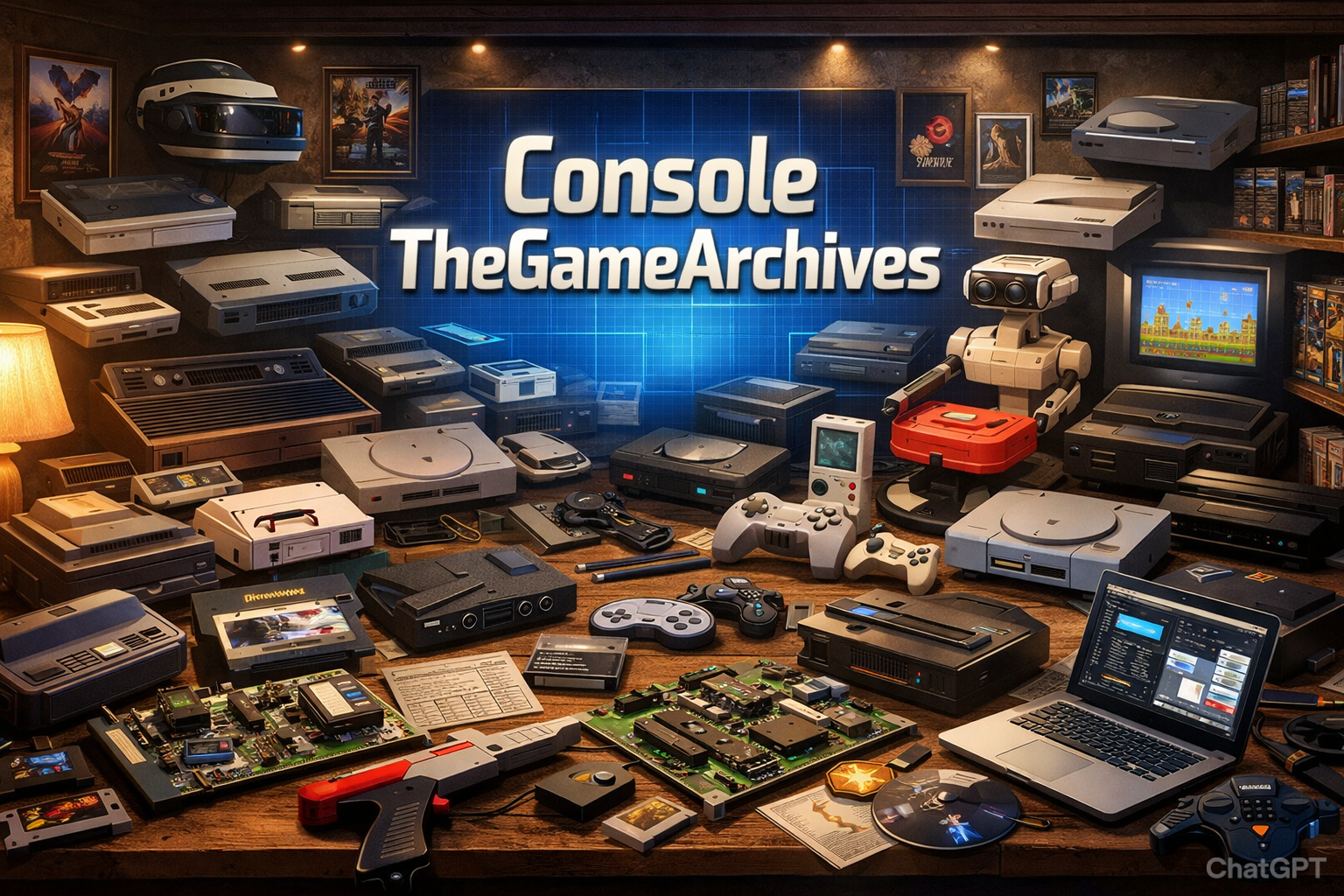
Console TheGameArchives The world of gaming has evolved at lightning speed. From chunky cartridges to cloud streaming, the journey of video game consoles is nothing short of fascinating. In the middle of this rapid evolution, platforms like Console TheGameArchives play a crucial role in preserving the legacy of gaming hardware and software. Think of it as a digital museum dedicated to consoles — a place where nostalgia meets documentation.
Console TheGameArchives isn’t just about listing old machines. It’s about telling the story behind them — the innovation, the competition, and the cultural shifts they sparked. Whether you grew up blowing dust out of cartridges or you’re a modern gamer curious about retro roots, this archive serves as a bridge between generations of players.
What makes it particularly interesting is its community-driven and research-backed approach. Instead of shallow summaries, you’ll often find deep dives into console development, regional variants, rare accessories, and even unreleased prototypes. It’s gaming history treated with the seriousness of academic preservation — but delivered in a way that still feels fun and accessible.
The Mission Behind Console TheGameArchives
At its core, Console TheGameArchives exists to preserve, document, and celebrate console gaming history. As technology advances, older systems face the risk of being forgotten, lost, or physically degraded. The archive steps in to ensure that doesn’t happen — digitally safeguarding knowledge that might otherwise disappear.
One major part of the mission is accuracy. Console specs, release timelines, hardware revisions, and manufacturing differences are carefully cataloged. This isn’t surface-level blogging — it’s structured archival work. Contributors often cross-reference manuals, developer interviews, and physical hardware teardowns to maintain credibility.
Another key goal is accessibility. Not everyone has the space or money to collect retro consoles, but archives make the knowledge universally available. Students, historians, collectors, and developers can all learn from the same centralized resource. In many ways, it democratizes gaming history — making sure it belongs to everyone, not just private collectors.
Exploring the Console Database
One of the standout features of Console TheGameArchives is its expansive console database. This section acts as the backbone of the platform, organizing systems by generation, manufacturer, and release year. It’s designed so users can either browse casually or research deeply.
Each console entry typically includes hardware specifications, CPU/GPU details, storage formats, controller designs, and launch titles. But it doesn’t stop there. Many listings explore marketing strategies, regional reception, and how each console performed commercially. This transforms raw data into a narrative.
What’s especially useful is the inclusion of hardware revisions and regional variants. For example, the same console might have different chipsets or casing designs depending on where it was sold. These subtle differences matter greatly to collectors and preservationists, and the archive treats them with impressive attention to detail.
Rare Consoles and Forgotten Hardware
While mainstream systems get plenty of coverage across the internet, Console TheGameArchives shines brightest when documenting rare and obscure hardware. This is where the platform feels like a treasure hunt for gaming enthusiasts.
You’ll often find entries on limited-release consoles, educational systems, and region-exclusive devices that never reached global audiences. Many of these machines had short lifespans or were commercial failures — yet they contributed valuable ideas to gaming innovation.
The archive also highlights unreleased or prototype consoles. These behind-the-scenes projects reveal what manufacturers were experimenting with — motion controls before they were popular, online connectivity before broadband, or hybrid cartridge/disc systems that never made it to store shelves. It’s a reminder that gaming history includes the “what could have been,” not just the hits.
Accessories, Peripherals, and Add-Ons
Consoles rarely existed alone. Controllers, light guns, memory expansions, VR headsets, and motion accessories all shaped how players experienced games. Console TheGameArchives dedicates significant space to documenting these peripherals in depth.
Each accessory entry often explores design intent, compatibility, and real-world performance. Some add-ons dramatically extended console lifespans, while others became infamous failures. Either way, they’re treated as important historical artifacts rather than footnotes.
This section is particularly valuable for collectors and restorers. Knowing which accessories were officially licensed, which were third-party, and which were region-locked can make a huge difference when building a functional retro setup. It transforms casual nostalgia into informed preservation.
The Role of Emulation and Digital Preservation
No conversation about console archiving is complete without discussing emulation. Console TheGameArchives approaches this topic from an educational and preservation standpoint rather than a purely technical one.
As physical hardware ages, maintaining working units becomes increasingly difficult. Components fail, plastics degrade, and proprietary parts become scarce. Emulation provides a way to preserve the functionality and study of consoles even when original hardware becomes rare.
The archive often documents how systems are emulated, the challenges involved, and the accuracy of different approaches. Timing cycles, audio processing, and custom chips all affect how faithfully a console can be reproduced digitally. By recording this information, the archive helps ensure that future generations can still experience classic games as authentically as possible.
Community Contributions and Collaborative Research
A major strength of Console TheGameArchives is its community involvement. Enthusiasts, collectors, engineers, and historians all contribute knowledge, scans, and technical findings. This collaborative model keeps the archive growing and evolving.
User submissions often include high-resolution motherboard scans, BIOS documentation, and teardown photography. These contributions go far beyond casual fandom — they’re valuable research materials. Many discoveries about console hardware actually originate from community investigations.
Moderation and verification ensure quality control. Contributions are reviewed, cross-checked, and updated when new information surfaces. This balance between openness and accuracy allows the archive to expand without sacrificing credibility.
Why Console Preservation Matters
Some people see old consoles as outdated toys, but preservationists view them as cultural artifacts. Console TheGameArchives reinforces the idea that gaming hardware reflects technological progress, design philosophy, and entertainment trends of its era.
Consoles influenced how stories were told, how players interacted, and how global gaming communities formed. From couch multiplayer to online ecosystems, each generation introduced social shifts alongside technical ones.
Preserving consoles also benefits developers. Modern engineers often study older hardware limitations to inspire creative solutions. Constraints from past systems have shaped many of today’s game design principles. By maintaining detailed archives, we keep those lessons accessible.
Educational and Research Value
Beyond nostalgia, Console TheGameArchives serves as a legitimate research tool. Students studying game design, computer engineering, or digital media history can use the archive as a reference library.
Hardware schematics, chipset breakdowns, and manufacturing notes provide insight into engineering evolution. Comparing console architectures across generations reveals how processing priorities shifted — from 2D sprite handling to 3D rendering to network infrastructure.
Educators also use archival material to teach preservation ethics. How do you store aging electronics? How do you digitize proprietary formats? These questions matter not just for games, but for all digital media preservation efforts.
The Future of Console TheGameArchives
Looking ahead, platforms like Console TheGameArchives will only grow in importance. As gaming moves toward digital-only distribution and cloud infrastructure, physical preservation becomes more urgent.
Future expansions may include interactive 3D console models, repair guides, and augmented reality hardware exploration. Imagine being able to virtually disassemble a historic console from your browser — that’s the direction archives are heading.
There’s also increasing interest in documenting online services tied to consoles. Digital storefronts, multiplayer servers, and firmware ecosystems are all part of gaming history now. Preserving them requires new archival strategies beyond physical hardware.
Final Thoughts
Console TheGameArchives represents more than a database — it’s a living record of gaming’s technological and cultural journey. By documenting consoles, accessories, prototypes, and preservation methods, it ensures that no generation of gaming hardware fades into obscurity.
What makes it special is the balance it strikes. It’s detailed enough for researchers, yet approachable for casual fans. You can dive into chipset architecture or simply relive memories of your first console — both experiences feel equally welcome.
In an industry obsessed with the next big release, archives remind us where it all began. And thanks to platforms like Console TheGameArchives, the legacy of console gaming remains not just remembered, but carefully preserved for decades to come.