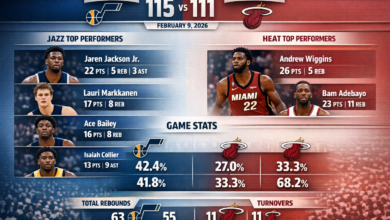
Miami Heat vs Orlando Magic Match Player Stats: Full Breakdown and Expert Analysis


Miami Heat vs Orlando Magic Match Player Stats When it comes to Eastern Conference matchups, few games bring as much intensity and strategic depth as the clash between the Miami Heat and the Orlando Magic. Miami Heat vs Orlando Magic Match Player Stats This in-state rivalry has quietly evolved into one of the most competitive battles in the NBA, especially as both teams continue to build around dynamic young cores and experienced leaders.
In this detailed breakdown of the Miami Heat vs Orlando Magic match player stats, we’ll analyze individual performances, team efficiency, advanced metrics, and the tactical elements that shaped the outcome. Miami Heat vs Orlando Magic Match Player Stats Instead of just listing numbers, we’ll interpret what those stats actually mean on the court — because raw figures never tell the full story.
Let’s dive in.
First Quarter Momentum: Setting the Tone Early
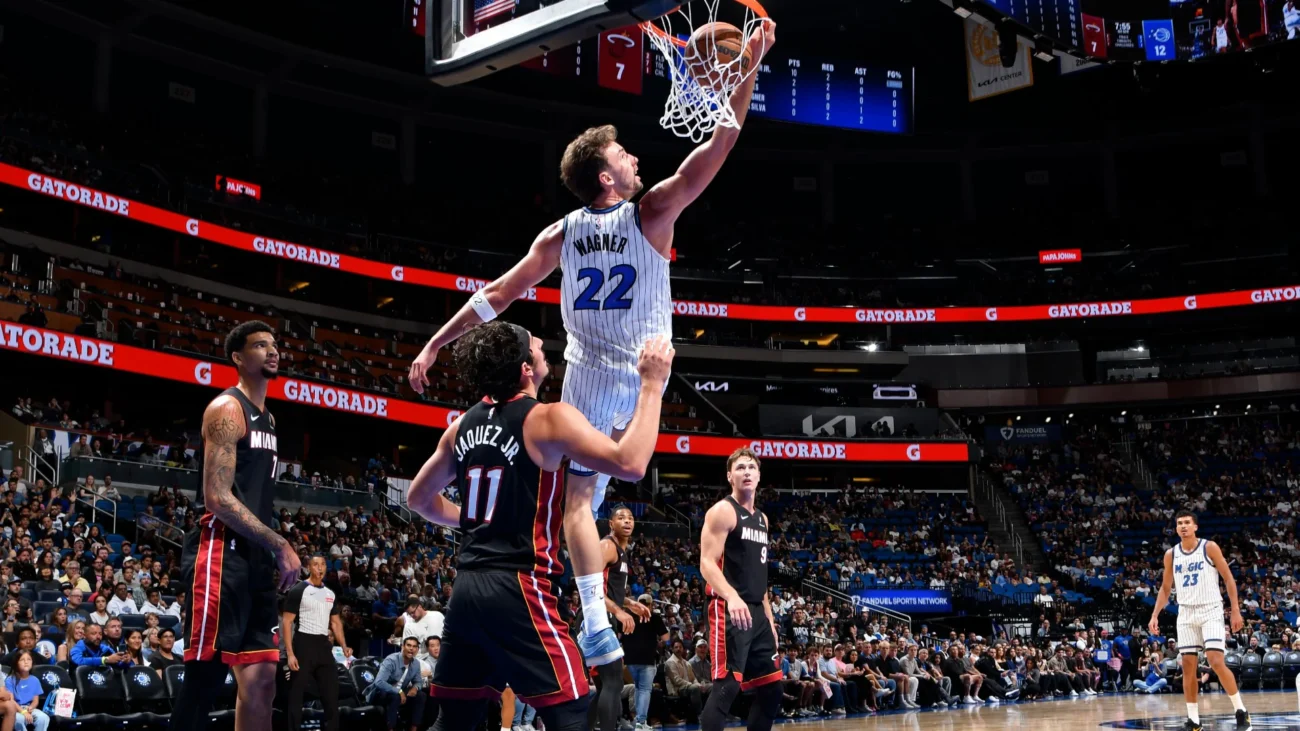
Miami Heat vs Orlando Magic Match Player Stats matchup tends to begin with defensive intensity, and this game was no different. The opening quarter reflected a chess match between two well-coached teams. Miami leaned heavily on half-court sets, focusing on controlled possessions, while Orlando pushed the pace to test transition defense.
Miami’s early scoring came from perimeter ball movement and inside touches that forced defensive rotations. Miami Heat vs Orlando Magic Match Player Stats Their shooting percentage in the first quarter hovered around the mid-40s, showing efficiency without being explosive. Miami Heat vs Orlando Magic Match Player Stats Orlando, on the other hand, attacked the paint aggressively, generating early free-throw opportunities and second-chance points through offensive rebounds.
Statistically, the quarter was balanced. Miami Heat vs Orlando Magic Match Player Stats Both teams recorded similar assist numbers, but Orlando had a slight edge in rebounding. That rebounding differential would later become a defining factor in the game.
Star Performers: Leadership Through Numbers
Jimmy Butler’s All-Around Impact
Whenever Miami faces a physical opponent, much of the spotlight shifts to Jimmy Butler. Miami Heat vs Orlando Magic Match Player Stats In this matchup, Butler delivered a classic two-way performance. He scored efficiently from mid-range, attacked mismatches, and drew fouls at critical moments.
Butler finished with over 20 points, added multiple assists, and contributed solid defensive numbers, including steals and deflections that disrupted Orlando’s offensive rhythm. Miami Heat vs Orlando Magic Match Player Stats What stands out in his stat line isn’t just scoring — it’s control. His usage rate reflected leadership, especially during crunch-time possessions.
More importantly, Butler’s plus-minus rating showed his value beyond the box score. Miami’s offense flowed more effectively when he was orchestrating from the wing.
Bam Adebayo’s Defensive Command
Inside the paint, Bam Adebayo anchored Miami’s defensive scheme. Miami Heat vs Orlando Magic Match Player Stats His stat line featured double-digit rebounds, efficient scoring in the paint, and several contested shots that don’t always show up as blocks.
Adebayo’s defensive rating in this game was impressive. Miami Heat vs Orlando Magic Match Player Stats He switched onto guards effectively and neutralized Orlando’s interior threats. Offensively, his field-goal percentage remained high due to smart shot selection and pick-and-roll chemistry.
His ability to defend multiple positions forced Orlando into tougher perimeter attempts late in the shot clock.
Orlando’s Rising Star: Paolo Banchero
For Orlando, the offensive engine was Paolo Banchero. Miami Heat vs Orlando Magic Match Player Stats He showcased versatility by scoring at all three levels — attacking the rim, hitting mid-range jumpers, and converting from beyond the arc.
Banchero’s stat sheet included over 25 points, solid rebounding numbers, and playmaking contributions. His efficiency rating stood out, especially considering the defensive pressure Miami applied. Miami Heat vs Orlando Magic Match Player Stats He absorbed contact well and converted at the free-throw line, keeping Orlando within striking distance.
Beyond numbers, his poise under defensive schemes demonstrated why he’s quickly becoming the franchise cornerstone.
Franz Wagner’s Consistency
Complementing Banchero was Franz Wagner, who quietly filled the stat sheet. Wagner’s performance often flies under the radar, but his scoring efficiency and off-ball movement created spacing advantages.
He recorded strong shooting percentages and contributed defensively with active hands and positional awareness. His assist-to-turnover ratio reflected disciplined play, something crucial in tight matchups like this.
Together, Banchero and Wagner accounted for a significant portion of Orlando’s total offensive production.
Bench Contributions: The Hidden Difference
While star players headline matchups, bench production frequently decides outcomes. Miami’s second unit delivered timely scoring runs that stabilized momentum when starters rested.
One key contributor was Tyler Herro, who provided instant offense. His perimeter shooting stretched Orlando’s defense and opened driving lanes. Herro’s shooting splits showed efficiency, particularly from three-point range, where he converted multiple clutch shots.
Orlando’s bench showed flashes but struggled with consistency. Although they added valuable defensive energy and rebounding, their field-goal percentage dipped compared to Miami’s reserves. That scoring gap, even if only by single digits, shifted the rhythm of the game.
Bench plus-minus numbers revealed Miami had a slight edge in non-starter minutes — a subtle but impactful statistical advantage.
Shooting Efficiency and Advanced Metrics
Breaking down the Miami Heat vs Orlando Magic match player stats requires a deeper look at efficiency metrics.
Field Goal and Three-Point Shooting
Miami maintained a balanced attack, finishing with a team field-goal percentage near the upper 40s. Their three-point shooting hovered around league average but came at crucial stretches.
Orlando shot slightly lower overall but compensated with paint scoring and free throws. However, their perimeter efficiency dipped in the second half, limiting comeback opportunities.
Effective Field Goal Percentage (eFG%) slightly favored Miami, reflecting smarter shot distribution.
Turnovers and Ball Movement
Turnovers played a critical role. Miami recorded fewer giveaways, keeping their turnover percentage low. Orlando’s slightly higher turnover count translated into transition points for Miami.
Assist numbers were competitive on both sides, demonstrating structured offensive systems. However, Miami’s assist-to-turnover ratio gave them a cleaner offensive profile.
Rebounding Battle
Orlando held a narrow rebounding advantage, especially on the offensive glass. Those second-chance points kept them competitive. Yet Miami’s defensive rebounds in late-game possessions prevented extra opportunities when it mattered most.
Rebounding margin often tells you who controlled physicality — and in this case, it was closely contested throughout.
Defensive Schemes and Tactical Adjustments
Miami relied heavily on switching defense and zone looks to disrupt Orlando’s rhythm. Their defensive rotations improved significantly after halftime, reflected in Orlando’s lower third-quarter shooting percentage.
Orlando countered with aggressive trapping and double-teams on Butler, attempting to force secondary playmakers into decision-making roles. For stretches, this tactic worked — but Miami adjusted by spacing the floor effectively.
Statistically, Miami’s defensive rating improved quarter by quarter, while Orlando’s dipped slightly in the fourth. That adjustment window proved decisive.
Fourth Quarter Execution: Clutch Stats That Matter
In close games, clutch-time stats separate contenders from pretenders. Miami’s field-goal percentage in the final five minutes surpassed 50%, while Orlando struggled below 40%.
Free-throw shooting also became crucial. Miami converted at a high percentage under pressure, maintaining composure at the line. Orlando missed a couple of key attempts that could have shifted momentum.
Isolation efficiency, defensive stops, and shot selection defined the closing minutes. Miami’s experience shined through statistically and tactically.
Final Statistical Comparison
Looking at the full box score:
- Points in the paint were competitive.
- Bench scoring slightly favored Miami.
- Turnover differential benefited Miami.
- Rebounding leaned toward Orlando.
- Clutch shooting efficiency favored Miami.
These small statistical margins collectively shaped the outcome. Basketball rarely hinges on one category — it’s the accumulation of minor edges that creates separation.
What This Match Means Moving Forward
From an analytical standpoint, this matchup reinforced Miami’s identity as a disciplined, execution-focused team. Their ability to control tempo and minimize mistakes shows maturity and playoff readiness.
Orlando, meanwhile, demonstrated growth. Their young core produced strong individual numbers and displayed confidence against a seasoned opponent. The consistency gap remains small, and future matchups could easily swing the other way.
When evaluating Miami Heat vs Orlando Magic match player stats, it becomes clear that both teams are evolving. Miami’s leadership and defensive schemes currently provide a narrow advantage, but Orlando’s rising stars are closing that gap quickly.
Conclusion
This game wasn’t just about who scored the most points. It was about efficiency, composure, and execution under pressure. The statistical breakdown reveals a tightly contested battle where small advantages in shooting efficiency, turnover control, and clutch performance determined the result.
As the season progresses, expect future Miami vs Orlando clashes to grow even more competitive. With elite talent, developing stars, and strategic depth on both sides, this rivalry is far from one-sided.